Autumn Budget 2026: What Has Changed?
The UK government published its Autumn Budget on 28 October 2026, introducing several measures affecting motorists, vehicle owners and businesses dependent on road transport.
The principal announcements concern fuel duty, business mileage allowances and the cost of public electric vehicle charging.
The Budget also confirms future changes to Vehicle Excise Duty (VED), electric vehicle taxation and company car tax.
Some measures provide immediate relief against previously scheduled costs. Others will take effect over the coming years.
Understanding the difference is important when assessing the financial consequences for motorists.
The Key Figures
Measure | Confirmed Budget position |
|---|---|
Petrol and diesel fuel duty | 5p-per-litre reduction extended to 1 July 2027 |
Main fuel duty rate | 52.95p per litre until 30 June 2027 |
Business mileage allowance | 55p for the first 10,000 miles; 35p thereafter |
Public EV charging | £100 million allocated over two years |
Potential EV charging saving | Around £150 annually for an eligible typical on-street charging user, according to government estimates |
Car, van and motorcycle VED | RPI-linked increase from 1 April 2027 |
Electric vehicle mileage tax | Planned introduction from April 2028 |
1. Fuel Duty: The Freeze Continues
The government has extended the temporary 5p-per-litre fuel duty reduction until 1 July 2027.
It has also postponed the previously planned inflation-linked increase until that date.
Consequently, the main duty rate on unleaded petrol and road diesel remains at 52.95p per litre until 30 June 2027.
From 1 July 2027, the published Budget rates are scheduled to increase to 60.59p per litre.
The extension therefore prevents the previously scheduled increase from taking effect earlier in 2027, rather than reducing the existing fuel duty rate.
What Does This Mean for Motorists?
The government's Budget estimates that its fuel duty decisions across the current Parliament will save the average car driver approximately £230 compared with the previous government's plans.
The corresponding estimates are £472 for the average light goods vehicle driver and nearly £4,000 for the average HGV driver.
These are cumulative comparisons against an earlier policy baseline, not direct payments or guaranteed savings on individual fuel bills.
Actual pump prices remain influenced by wholesale fuel costs, international markets, exchange rates and retailer pricing.
A freeze in fuel duty does not necessarily mean a freeze in petrol or diesel prices.
2. Business Mileage Allowances: Higher Rates Confirmed
The Budget makes permanent the increase in tax-free mileage allowances for employees and self-employed people using their own cars or vans for qualifying business journeys.
The first 10,000 business miles are covered by the 55p-per-mile rate, which took effect from 6 April 2026.
From 6 April 2027, the rate for qualifying business mileage above 10,000 miles will increase from 25p to 35p.
Annual business mileage | Previous annual allowance | Allowance at both new rates |
|---|---|---|
6,000 miles | £2,700 | £3,300 |
10,000 miles | £4,500 | £5,500 |
15,000 miles | £5,750 | £7,250 |
These figures represent qualifying mileage allowances, not the amount of tax saved.
The government estimates that someone travelling 6,000 qualifying business miles could receive up to £120 in additional annual tax savings, while someone travelling 15,000 miles could receive up to £300.
Approximately three million employees and self-employed people are expected to benefit.
The practical effect depends on eligibility, reimbursement arrangements and individual tax circumstances.
Ordinary commuting between home and a permanent workplace does not generally qualify as business mileage.
3. Electric Vehicles: £100 Million to Reduce Public Charging Costs
The Budget announces £100 million over two years to reduce the cost of local, lower-powered public EV charging.
The measure follows an independent review of public charging costs.
The government estimates that, from spring 2027, the support could save an average EV driver who relies on on-street charging approximately £150 annually.
This is a projected saving for a particular charging profile, not a guaranteed reduction for every EV owner.
The government is also establishing a taskforce to examine whether motorists could use their domestic electricity tariffs at suitable local public charging points.
That arrangement remains under consideration and has not been introduced.
The Department for Transport is expected to provide further implementation details.
Why Does This Matter?
Access to home charging is an important factor in the cost of operating an electric vehicle.
Motorists without driveways or private charging facilities may depend on public charging networks, where prices can differ substantially.
The Budget's new funding specifically addresses some of these costs.
However, the actual benefit will depend on how the funding is distributed, which charging facilities qualify and the final arrangements introduced.
4. Vehicle Excise Duty: Increases Scheduled for April 2027
The Budget confirms that VED rates for cars, vans and motorcycles will increase in line with the Retail Prices Index from 1 April 2027.
For the 2026–27 tax year, the standard annual rate for most cars registered from April 2017 is £200.
The amount payable can differ depending on registration date, emissions, vehicle classification and applicable supplements.
The new Budget confirms the uprating policy rather than a single flat increase applying equally to all vehicles.
Owners should therefore check the applicable rate for their particular vehicle when renewing VED after April 2027.
The government also confirms that company car benefit-in-kind percentage rates will increase by one percentage point across vehicle bands for 2030–31, subject to a 40% maximum.
For zero-emission company cars, the published percentage will rise from 9% in 2029–30 to 10% in 2030–31.
These are future tax changes and do not affect every privately owned vehicle.
5. Electric Vehicle Mileage Tax: New Implementation Details
The government has reaffirmed its intention to introduce Electric Vehicle Excise Duty, a mileage-based charge for electric and plug-in hybrid cars, from April 2028.
Under the previously announced policy, the proposed charges are:
Vehicle type | Planned mileage charge |
|---|---|
Battery electric car | 3p per mile |
Plug-in hybrid car | 1.5p per mile |
At 10,000 miles annually, the charge would amount to £300 for a battery electric car or £150 for a plug-in hybrid.
The October Budget also provides additional details about administration.
The government intends to introduce a mileage estimation tool when the system launches.
It is also developing an optional connected-vehicle system, known as eVED Connect, which could use a vehicle's built-in connectivity to reduce the need for manual mileage reporting.
An automated refund model is planned by 2030.
These arrangements remain subject to development and implementation.
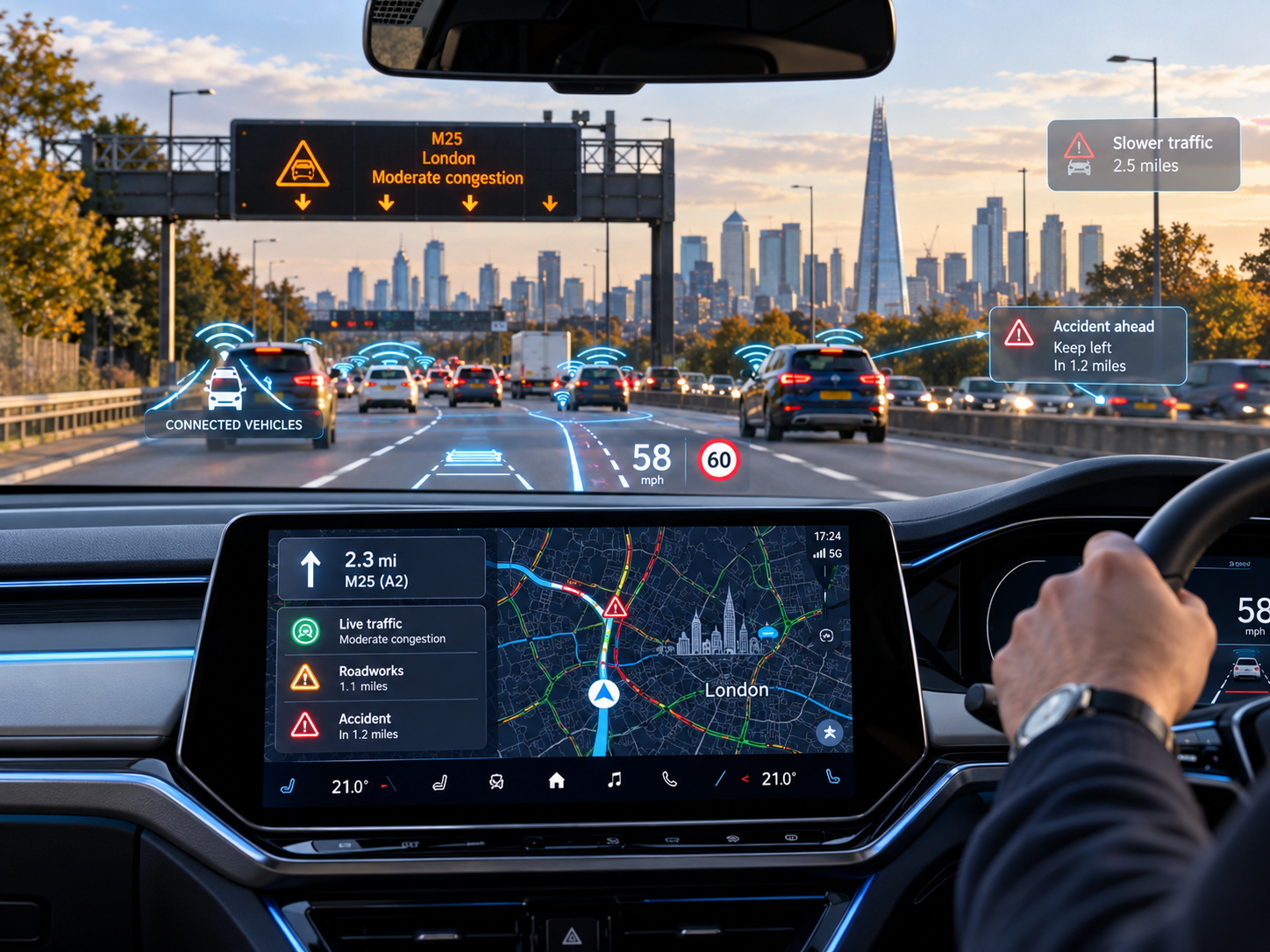
The connected-vehicle element is particularly relevant to the wider automotive industry's increasing use of digital vehicle data, although the Budget does not establish any broader access to motorists' vehicle information.
6. Commercial Vehicles: HGV Tax Relief Continues
The government has maintained support for heavy goods vehicle operators.
Most qualifying HGVs can benefit from a reduced annual VED rate of £1 for licences or renewals taken out between 1 July 2026 and 30 June 2027.
The government states that the measure saves approximately £600 for a typical HGV.
The Budget also extends the temporary reduction in red diesel duty until 1 July 2027 for eligible users.
These measures are relevant to commercial transport costs, although their financial impact depends on vehicle type, fuel use and eligibility.
They should not be interpreted as evidence that overall fleet operating costs are declining.
7. What About Potholes and Road Maintenance?
The Budget's principal new motoring measures focus on taxation and charging costs rather than a new, separately identified national pothole programme.
Existing government road-maintenance commitments remain relevant to motorists.
However, announced funding and completed improvements should be assessed separately.
Road conditions depend on the delivery of local maintenance programmes and the condition of individual routes.
It would therefore be premature to associate the Budget's financial measures with a measurable reduction in pothole damage, vehicle breakdowns or roadside recovery demand.
What Does the Budget Mean for Different Drivers?
The consequences vary according to vehicle type and use.
Petrol and diesel drivers retain the benefit of the temporary fuel duty reduction until July 2027, although market prices can still change.
People driving their own vehicles for work may benefit from higher qualifying mileage allowances and associated tax relief.
Electric vehicle owners without home charging may benefit from the announced public charging support, depending on its implementation.
Owners of cars, vans and motorcycles face scheduled RPI-linked VED changes from April 2027.
Electric and plug-in hybrid car owners must also account for the planned mileage-based taxation system from April 2028.
Commercial fleet operators may benefit from specific HGV measures while continuing to face wider fuel, maintenance, insurance and operating costs.
Conclusion: Lower Immediate Tax Pressure, but Future Costs Remain
The Autumn Budget 2026 extends an existing fuel duty reduction, increases qualifying business mileage allowances and allocates funding to address public EV charging costs.
These measures may reduce certain costs or prevent previously scheduled increases for eligible motorists.
At the same time, the Budget confirms future changes to VED and provides further details of the planned electric vehicle mileage-tax system.
The financial effect is therefore not uniform across vehicle owners.
For motorists, the important distinction is between immediate measures, future tax changes and projected savings that depend on implementation.
The Budget provides some near-term cost relief, but vehicle ownership and road travel will continue to be shaped by taxation, energy prices, maintenance expenses and the transition towards increasingly electrified vehicles.
Official Sources and Further Reading
HM Treasury — Budget 2026, Full Official Document (28 October 2026)
https://www.gov.uk/government/publications/budget-2026-document/budget-2026-html
HM Treasury — Budget 2026: Rates and Allowances
https://www.gov.uk/government/publications/budget-2026-overview-of-tax-legislation-and-rates-ootlar/annex-a-rates-and-allowances
UK Parliament — Business Mileage Allowances Statement (27 October 2026)
https://questions-statements.parliament.uk/written-statements/detail/2026-10-27/hlws431
HM Treasury — Budget 2026 Announcement
https://www.gov.uk/government/news/budget-2026-breathing-space-for-today-hope-for-the-future
Disclaimer
This article has been prepared using publicly available information from official organisations, industry publications and other publicly accessible sources available at the time of publication.
The ROBELIUM Newsroom provides editorial summaries intended to support general awareness of developments within the transport, mobility and roadside assistance sectors. Content does not constitute live traffic management, operational forecasting, route guidance, legal advice, safety advice or professional advice.
ROBELIUM is not affiliated with, endorsed by, or acting on behalf of any official transport authority, public body, road operator, emergency service or third-party organisation referenced in this article, unless explicitly stated.
Information, planned works, transport conditions and public announcements may change following publication. Readers should refer to the relevant official authority or original source for the latest updates where appropriate.