Reliability Is No Longer Just About Mechanical Engineering
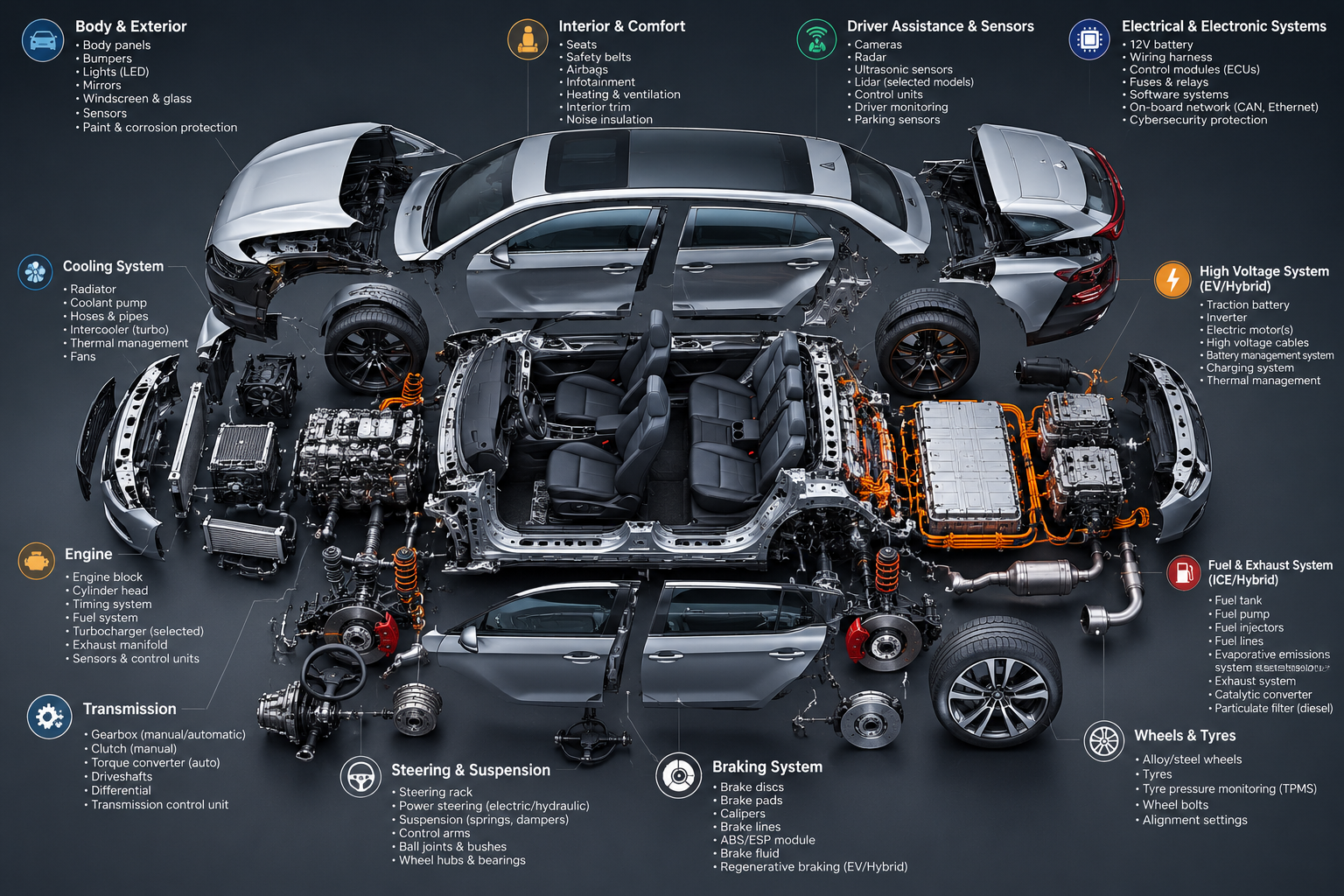
For decades, vehicle reliability was largely associated with the durability of engines, transmissions, electrical components and mechanical systems.
A reliable car was one that started consistently, required relatively few repairs and could accumulate substantial mileage without major mechanical failure.
Those characteristics remain important today.
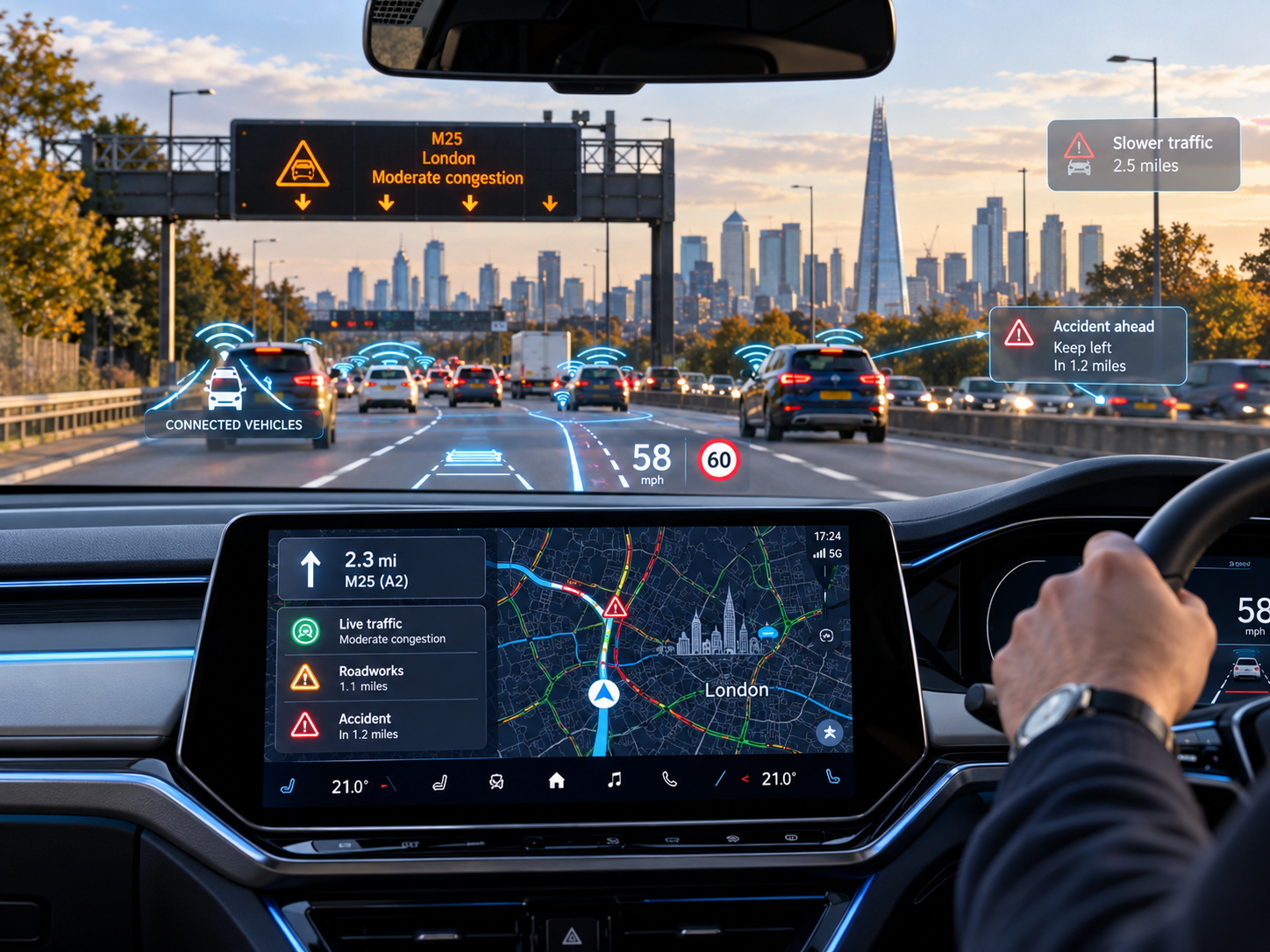
However, modern vehicle development has introduced additional measures of reliability, including electronic system stability, software performance, battery management, connectivity and the long-term availability of technical support.
A vehicle may remain mechanically sound while some of its digital functions become outdated or unsupported.
Conversely, a technologically advanced vehicle may offer sophisticated safety and convenience features while still experiencing relatively ordinary mechanical or electrical faults.
This distinction is becoming increasingly important as manufacturers develop software-defined vehicles and companies introduce more advanced automated driving technologies.
What Makes Modern Cars More Reliable?
Improvements in manufacturing quality, materials, engineering and diagnostic technology have contributed to the durability of many modern vehicles.
Engine management systems can monitor operating conditions continuously, while electronic diagnostics can identify certain faults before they develop into more serious failures.
Advances in lubrication, corrosion protection, manufacturing tolerances and component design have also helped extend the useful life of vehicle systems.
Electric vehicles introduce another potential reliability advantage: their propulsion systems generally contain fewer mechanical components subject to conventional engine-related wear.
Evidence from Germany's ADAC provides an indication of this difference.
In its 2026 breakdown statistics, ADAC reported that four-year-old electric vehicles experienced 6.5 breakdowns per 1,000 vehicles during 2025, compared with 12.5 per 1,000 for combustion-engine vehicles of the same age.
The organisation also reported that the breakdown probability for ten-year-old vehicles had fallen from 6.5% in 2015 to 3.1% in 2025.
These findings suggest improvements in vehicle durability, although the figures relate to ADAC's German breakdown dataset and should not be interpreted as UK-wide reliability statistics.
The Persistent Problem of Electrical Reliability
Despite increasingly advanced vehicle technology, relatively simple electrical failures remain a significant source of breakdowns.
ADAC identified 12-volt battery faults as the leading cause of roadside assistance callouts, accounting for almost half of the cases examined.
This is particularly relevant because modern electric and hybrid vehicles still rely on low-voltage electrical systems to operate essential control functions.
A vehicle can have a fully charged high-voltage traction battery yet become immobilised because its 12-volt electrical system cannot operate correctly.
UK consumer research published by Which? in May 2026 also highlighted this issue.
Its survey of more than 63,000 car owners found that, among vehicles less than four years old, reported 12-volt battery faults affected approximately:
Vehicle type | Reported fault rate |
|---|---|
Petrol | 1.4% |
Diesel | 1.8% |
Plug-in hybrid | 3.5% |
Electric | 3.8% |
Full hybrid | 5.5% |
These figures describe reported 12-volt battery faults, not the overall probability of a vehicle breaking down.
They illustrate how advanced vehicle technology can coexist with familiar reliability problems.
When Does a Reliable Car Become Technologically Outdated?
Technological obsolescence is different from mechanical failure.
A vehicle may continue to operate safely and reliably while its digital systems no longer offer the capabilities available in newer models.
This can occur through several developments:
Older infotainment systems may no longer support current applications or connectivity standards.
Manufacturers may discontinue certain software updates or connected services.
Navigation and communications systems may depend on technologies that are progressively replaced.
New driver-assistance capabilities may require sensors, processors and electronic architectures that older vehicles do not possess.
Some replacement electronic components may become more difficult or expensive to obtain as vehicles age.
Not every older vehicle will experience these limitations, and the loss of a convenience feature does not necessarily make a vehicle unsafe or unroadworthy.
However, long-term vehicle ownership increasingly depends on both physical component availability and continued support for digital systems.
This introduces a distinction between a vehicle's mechanical lifespan and the useful life of its technological features.
Software-Defined Vehicles: A Different Development Model
Traditional vehicles receive most of their functionality during manufacture.
Software-defined vehicles are designed to allow more functions to be managed, modified or improved through software throughout their service life.
Depending on the manufacturer and vehicle architecture, updates may improve selected functions, correct software defects or introduce additional features without replacing physical components.
This approach creates opportunities to maintain and improve vehicles after delivery.
It also introduces new responsibilities involving cybersecurity, software compatibility, update management and long-term manufacturer support.
In the UK, the Vehicle Certification Agency identifies UN Regulations 155 and 156 as key international frameworks addressing vehicle cybersecurity and software updates.
The Department for Transport has also set out its approach to incorporating these requirements into Great Britain's vehicle type-approval system.
These developments reflect the growing importance of software governance in vehicle safety and regulatory compliance.
However, the ability to receive software updates does not guarantee that every vehicle will receive new features indefinitely.
Hardware limitations, manufacturer support policies and technical compatibility remain relevant.
Self-Driving Technology Accelerates Automotive Development
The emergence of automated driving technology adds another dimension to the pace of automotive innovation.
Companies including Waymo, Wayve and Baidu are developing systems intended to perform increasingly complex driving tasks.
London has become an important location for the testing and proposed introduction of automated passenger services.
In May 2026, the Department for Transport opened applications for operators wishing to participate in Britain's automated passenger services pilot programme.
The programme provides a framework for testing passenger-carrying automated vehicles under specified regulatory and safety requirements.
More recently, on 23 October 2026, Reuters reported that Baidu and Freenow had presented Baidu's RT6 autonomous vehicle in London.
The companies are testing vehicles with safety drivers and have outlined plans for a driverless passenger service in 2027, subject to regulatory approval.
Other companies, including Waymo and Wayve, are also pursuing automated driving deployments.
These developments demonstrate the pace of investment and experimentation in the sector.
They do not establish that fully driverless vehicles have become universally available, or that existing privately owned vehicles are approaching the end of their useful lives.
Driver Assistance Is Not the Same as Self-Driving
As automotive technology advances, it is important to distinguish between driver-assistance systems and vehicles authorised to drive themselves.
Adaptive cruise control, lane-keeping assistance and automated emergency braking can support drivers in specific circumstances.
However, these features do not necessarily remove the driver's responsibility to supervise and control the vehicle.
The UK government has introduced measures intended to prevent misleading descriptions of automated driving capabilities.
In July 2026, ministers announced regulations protecting terms associated with self-driving vehicles, reflecting concerns that motorists could misunderstand the capabilities of advanced driver-assistance systems.
The distinction is important for public safety.
A vehicle equipped with sophisticated sensors and automated functions should not be assumed to operate without human supervision unless it has the appropriate authorisation and is being used within its approved operating conditions.
The Changing Meaning of Vehicle Longevity
The automotive industry is increasingly managing two overlapping forms of vehicle longevity.
Mechanical longevity concerns the continued durability and serviceability of engines, electric drive systems, transmissions, suspension, braking systems and other physical components.
Technological longevity concerns the continuing usefulness, compatibility and support of electronic systems, software and connected services.
These two measures do not always develop at the same rate.
A well-maintained vehicle may remain mechanically reliable long after newer models have introduced more advanced connectivity or driver-assistance functions.
Equally, a newer vehicle may receive sophisticated software updates while still requiring conventional maintenance and repairs.
The emergence of automated driving technology makes the difference more visible, but it does not automatically render conventional vehicles obsolete.
For motorists, the more relevant question may be whether a vehicle continues to meet their practical requirements safely, reliably and economically.
What Does This Mean for Roadside Assistance?
The increasing complexity of modern vehicles has implications for roadside diagnosis and recovery.
Breakdowns may involve conventional mechanical problems, electrical supply faults, communication failures between control modules or software-related issues.
Electric vehicles and vehicles equipped with advanced driver-assistance systems may also require manufacturer-specific handling, recovery or repair procedures.
Accurate identification of the vehicle and the circumstances of the breakdown becomes increasingly important when determining what assistance is appropriate.
Nevertheless, technological sophistication does not eliminate the need for familiar roadside services.
Flat tyres, damaged suspension components, electrical failures and accident recovery remain relevant across vehicle types.
As automotive technology develops, roadside assistance will continue to depend on a combination of technical competence, suitable equipment, clear communication and safe working practices.
Looking Ahead
Vehicle reliability and technological progress should not be treated as opposing forces.
Modern engineering has the potential to improve durability, while digital systems can support better diagnostics, safety functions and software maintenance.
At the same time, growing electronic complexity introduces new dependencies and questions about long-term support.
The arrival of more advanced automated vehicles makes those questions increasingly relevant.
For manufacturers, the challenge is to ensure that innovation remains compatible with durability, repairability and long-term ownership.
For motorists, the priority remains straightforward: a vehicle that operates safely, performs reliably and remains economical to maintain.
A car does not become mechanically unreliable simply because newer technology exists. But in an increasingly digital automotive industry, reliability alone may no longer tell the whole story.
Sources and Further Reading
ADAC — Breakdown Statistics 2026 (23 April 2026)
https://presse.adac.de/meldungen/adac-ev/technik/adac-pannenstatistik-2026.html
Which? — 12-Volt Battery Faults in Modern Hybrid and Electric Vehicles (29 May 2026)
https://www.which.co.uk/news/article/revealed-the-surprising-fault-affecting-new-hybrids-and-evs-aWHWT7y2J77y
Vehicle Certification Agency — Cybersecurity and Software Updating
https://www.vehicle-certification-agency.gov.uk/connected-and-automated-vehicles/cyber-security-and-software-updating/
Department for Transport — Automated Passenger Services Pilot (22 May 2026)
https://www.gov.uk/government/news/passengers-one-step-closer-to-booking-taxi-and-bus-style-self-driving-vehicles
UK Parliament — Automated Vehicles Marketing Restrictions (7 July 2026)
https://questions-statements.parliament.uk/written-statements/detail/2026-07-07/hcws196
Reuters — Baidu Tests Robotaxi on London Streets (23 October 2026)
https://www.reuters.com/business/finance/chinas-baidu-tests-robotaxi-london-streets-2026-10-23/
Disclaimer
This article has been prepared using publicly available information from official organisations, industry publications and other publicly accessible sources available at the time of publication.
The ROBELIUM Newsroom provides editorial summaries intended to support general awareness of developments within the transport, mobility and roadside assistance sectors. Content does not constitute live traffic management, operational forecasting, route guidance, legal advice, safety advice or professional advice.
ROBELIUM is not affiliated with, endorsed by, or acting on behalf of any official transport authority, public body, road operator, emergency service or third-party organisation referenced in this article, unless explicitly stated.
Information, planned works, transport conditions and public announcements may change following publication. Readers should refer to the relevant official authority or original source for the latest updates where appropriate.