







Thousands of illegal cloned /ghost number plates on cars revealed by new cameras.
Vehicle registration fraud is becoming an increasingly significant concern for motorists, police and enforcement authorities.
New figures published by the RAC on 16 October 2026, following a Freedom of Information request to the Driver and Vehicle Licensing Agency (DVLA), show that 11,402 motorists contacted the agency during 2025 about fines or penalties relating to vehicle activity they did not recognise or accept responsibility for.
That represents an increase of approximately 9% compared with 2024 and 93% compared with 2018, when 5,912 reports were recorded.
The figures indicate a sustained increase in disputed vehicle identification incidents. However, they do not represent confirmed cases of criminal cloning. The DVLA acknowledges that some reports may arise from administrative errors, incorrect registration entries or camera misidentification.
Nevertheless, the trend highlights an important challenge: ensuring that vehicle registration information remains accurate and dependable as digital enforcement becomes more widespread.
RAC Media Centre+1
What is number plate fraud?
Vehicle cloning occurs when a registration number belonging to a legitimate vehicle is copied and displayed on another vehicle.
In some cases, the offending vehicle is deliberately matched to the original vehicle's make, model and colour, making identification more difficult.
Other forms of registration plate misuse include:
Ghost or stealth plates: Plates using materials or treatments intended to interfere with Automatic Number Plate Recognition (ANPR) cameras.
Altered registration characters: Incorrect spacing, lettering or modifications that make registration numbers difficult to identify.
Vehicle identity cloning: Stolen vehicles given false identities, sometimes involving altered vehicle identification numbers and supporting documentation before being offered for sale.
Not every non-compliant number plate indicates deliberate criminal activity. However, deliberate plate misuse can undermine the accuracy of vehicle identification and enforcement records.
GOV.UK+1
The consequences for innocent motorists
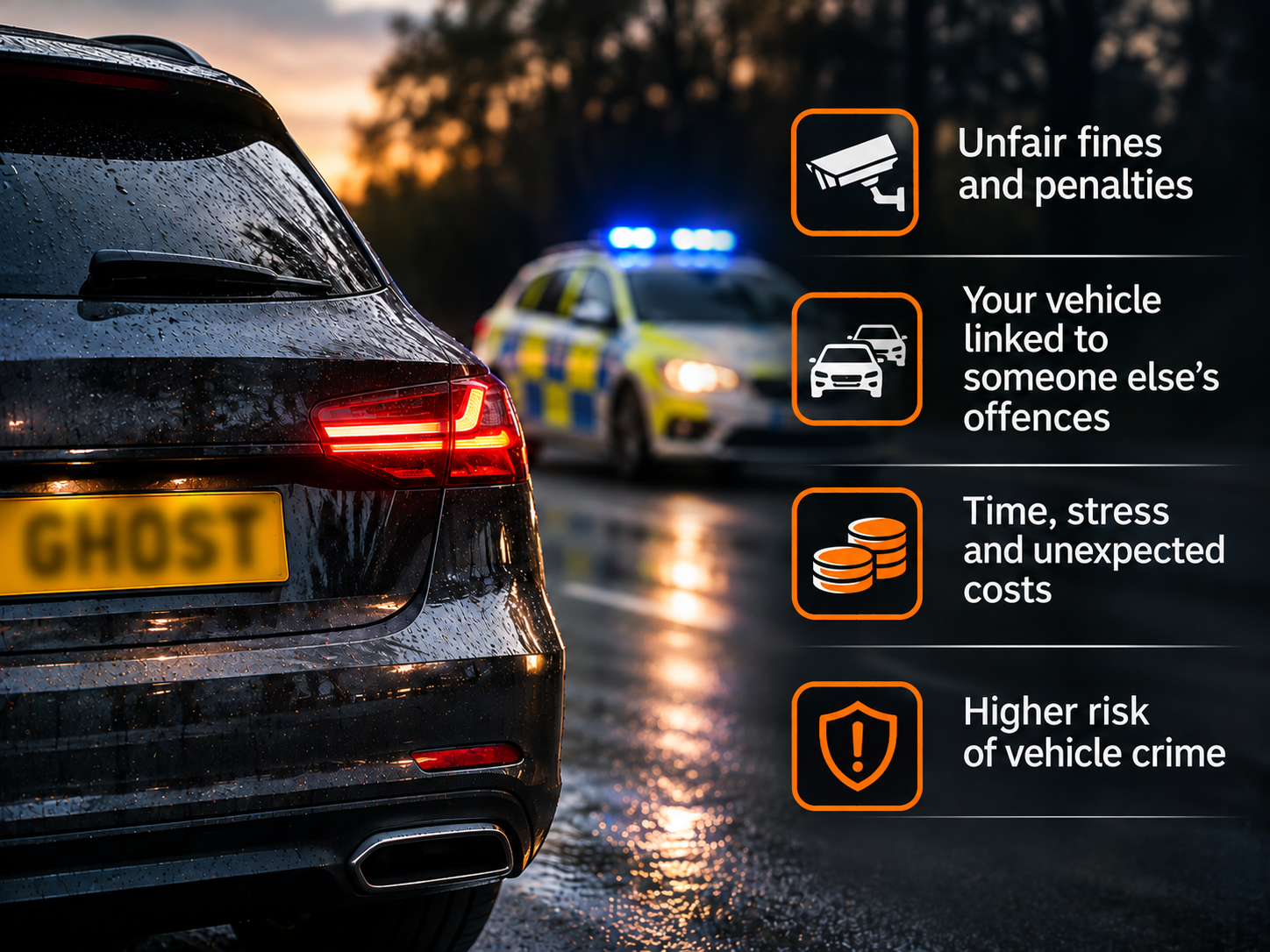
For many drivers, the first indication that their registration has been cloned is an unexpected speeding notice, parking penalty or road-user charging demand.
The genuine vehicle owner may never have visited the location concerned, yet can still face the administrative burden of demonstrating that their vehicle was not involved.
This can require correspondence with enforcement authorities, supporting documentation and challenges to individual penalties.
Businesses operating commercial fleets, rental vehicles and company cars may encounter similar difficulties, particularly when managing multiple vehicles and drivers.
Vehicle identity fraud can also have serious consequences for unsuspecting buyers. Purchasing a stolen vehicle carrying a cloned identity can result in police recovering the vehicle, potentially leaving the buyer with substantial financial losses.
The wider financial impact remains difficult to establish. In a parliamentary response published in November 2025, the Department for Transport confirmed that information on the total costs to motorists resulting from vehicle cloning was not available.
UK Parliament+1
Why digital enforcement matters
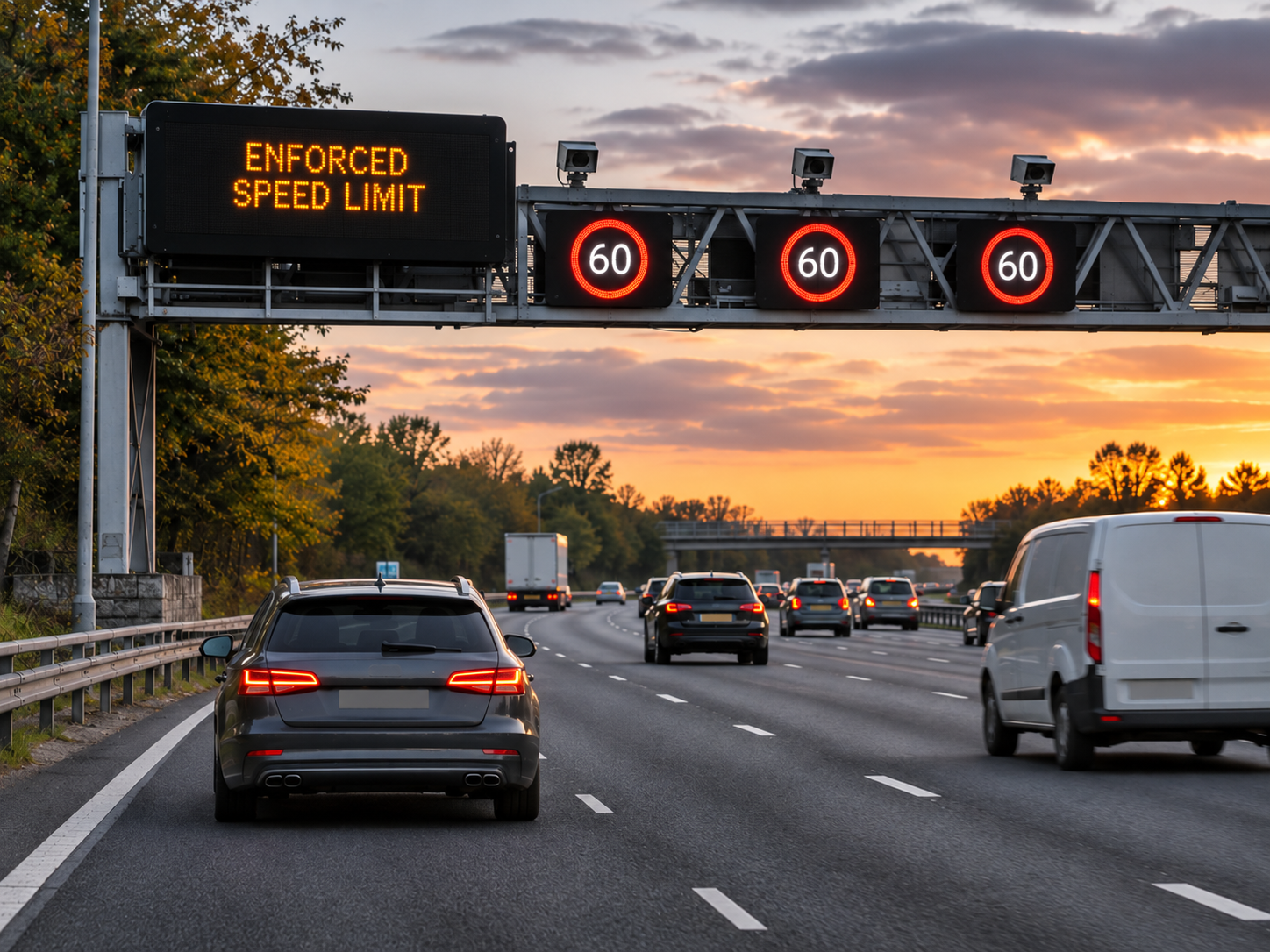
Britain's road network increasingly relies on ANPR technology for policing, traffic enforcement and road-user charging.
According to the RAC, approximately 18,000 ANPR cameras across the UK generate around 90 million vehicle registration reads each day.
These systems depend on accurately identifying displayed registration numbers and matching them with vehicle records.
When a criminal copies a legitimate registration, enforcement activity may initially be associated with the wrong registered keeper.
Conversely, plates deliberately designed to interfere with camera recognition can make vehicles more difficult to identify.
These are different problems, but both highlight the importance of reliable registration standards and effective enforcement.
RAC Media Centre+1
Government response and enforcement
On 5 September 2026, the Department for Transport announced funding for a new National Roads Policing Coordination Centre, intended to strengthen cooperation between police forces and improve intelligence sharing.
The initiative includes trials of technology designed to identify registration plates that have been modified to evade conventional camera systems.
The government has also consulted on stronger penalties, revised registration plate standards and improvements to enforcement arrangements.
These proposals should be distinguished from legislation already in force.
Under existing rules, motorists can face fines of up to £1,000 for incorrectly displayed registration plates.
The DVLA and Driver and Vehicle Standards Agency (DVSA) are also working with police to support investigations into illegal number plate supply and enforcement activity.
These are confirmed government initiatives, although their long-term effectiveness has not yet been established.
A new reporting system for suspected cloning
A further development was announced on 14 October 2026 by the National Police Chiefs' Council.
A dedicated online reporting service, developed in partnership with the DVLA, now allows motorists to report suspected number plate cloning through participating police force websites.
Reports submitted through the new service can be shared automatically with the DVLA, reducing the need for motorists to notify both organisations separately.
This is an administrative improvement intended to simplify reporting. It does not automatically establish that cloning has occurred or cancel any disputed penalties.
National Police Chiefs' Council (NPCC)+1
What should motorists do if their registration is cloned?
Motorists who suspect their vehicle registration has been copied should act promptly.
Report the suspected cloning to the police. Use the dedicated online reporting service where available and ensure the DVLA is notified.
Challenge any incorrect penalties. Contact each issuing authority directly, following its appeal or representation procedure.
Preserve supporting evidence. Photographs, vehicle location information and relevant correspondence may help establish the genuine vehicle's whereabouts.
Keep the police reference number. This may assist with further enquiries and disputes.
Respond to subsequent notices. Reporting suspected cloning does not automatically resolve existing or future penalties.
Motorists can consult the government's official guidance for further information.
The wider road safety concern
Reliable vehicle identification is fundamental to road policing, enforcement and public confidence in traffic management.
The increase in disputed registration incidents demonstrates why number plate security deserves attention from motorists, businesses and enforcement authorities.
Improved detection technology, stronger controls on the supply of registration plates and effective cooperation between agencies may contribute to addressing the problem.
For motorists, awareness and prompt reporting remain important practical measures.
For the wider automotive sector, the issue reinforces a broader principle: as Britain's roads become increasingly digital, accurate and secure vehicle identification becomes more important than ever.
Sources and further reading
The following official and industry publications provide the evidence and guidance referenced in this article.
RAC — Reports of cloned vehicles rise to record high, 16 October 2026
Department for Transport — Crackdown on illegal number plates, 5 September 2026
National Police Chiefs' Council — New reporting service for cloned number plates, 14 October 2026
UK Parliament — DVLA vehicle cloning statistics, 18 November 2025
Disclaimer
This article has been prepared using publicly available information from company publications, official announcements, industry sources and other publicly accessible materials available at the time of publication.
The ROBELIUM Newsroom provides editorial summaries intended to support general awareness of developments within the transport, mobility, fleet and roadside assistance sectors.
Content does not constitute investment advice, legal advice, technical advice, operational guidance or professional advice.
ROBELIUM is not affiliated with, endorsed by, or acting on behalf of any organisation referenced in this article, unless explicitly stated.
Information and public announcements may change following publication. Readers should refer to the relevant original source for the latest updates where appropriate.
CMS tags: Number Plate Fraud, Vehicle Cloning, DVLA, ANPR, Road Safety, Vehicle Crime, UK Motoring, Industry Intelligence