







Overview
The Department for Transport confirmed on 17 November 2026 that the Home Office had revoked the type approval of a speed enforcement camera system used on parts of England's strategic road network.
The decision follows investigations into technical issues affecting the interaction between variable speed limit signs and enforcement cameras.
The government also published the findings of an independent review led by Tracy Westall OBE, examining how the original problem developed and how it was handled.
The announcement concerns a specific camera system, not the withdrawal of speed enforcement across England's motorway network.
How the technical problem emerged
The original anomaly was identified during 2025 and related to equipment upgraded or installed from 2019 onwards.
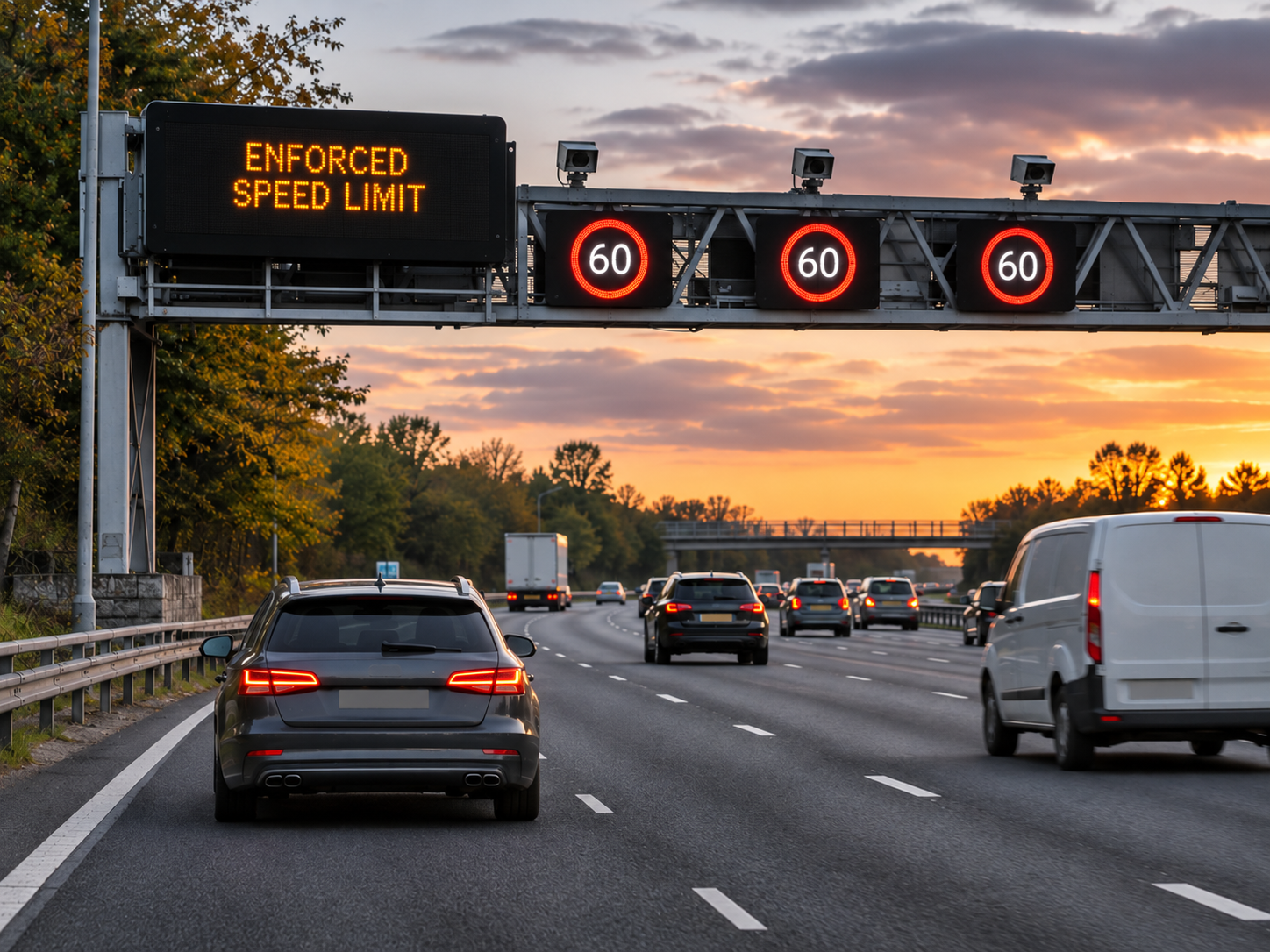
Under certain circumstances, a change in the speed displayed on motorway signs was not correctly reflected in the enforcement system.
This created situations in which cameras could record an apparent speeding offence even though the displayed limit had recently changed, or before a driver had sufficient opportunity to respond to a new limit.
According to the government, the affected system operated on approximately 0.2% of England's road network.
Measures were introduced to prevent further incorrect enforcement, while work began to identify motorists eligible for redress.
The government says everyone it has been able to identify and contact has been offered redress, and that eligible cases will continue to be addressed.
UK Parliament+1
Further testing identifies another potential issue
Following the discovery of the original anomaly, National Highways and the Home Office undertook additional technical and operational testing.
That investigation identified a separate potential problem involving the circumstances in which the cameras might activate.
National Highways' modelling assessed the probability of those circumstances arising at no more than 0.1%.
Importantly, the government stated that there was no real-world evidence that this additional potential fault had affected enforcement.
The distinction is significant: the original anomaly had resulted in incorrect enforcement, while the additional issue was identified through testing and modelling.
Nevertheless, the Home Office concluded that the camera system could not be brought into satisfactory compliance within a reasonable timeframe.
Its type approval was consequently revoked.
National Highways ends enforcement arrangement
Following the Home Office decision, National Highways confirmed that it was ending its contractual relationship with Verra Mobility for enforcement using the affected camera system.
The equipment had originally been procured on the basis that it retained the necessary Home Office approval.
National Highways is also considering further commercial and legal options.
The withdrawal of approval affects the system's evidential status for enforcement purposes. It does not remove the legal obligation to comply with speed limits or mean that motorway speeding is no longer enforced.
The government confirmed that variable speed limit signs will continue to operate.
Additional traffic officer patrols and the use of existing CCTV have been introduced at relevant locations, alongside other established enforcement and road safety measures.
UK Parliament
Independent review examines wider weaknesses
The independent Westall Review, published on 17 November, examined the original anomaly and the response that followed its discovery.
It identified lessons across seven areas, including data and technology management, critical systems, crisis response, legal support, organisational culture, governance and procurement.
The review addresses not only the technical fault but also how information about the problem was investigated, escalated and communicated.
Both the government and National Highways have accepted its recommendations.
National Highways has begun implementing improvements, with the Department for Transport responsible for monitoring progress through its existing oversight arrangements.
Why the development matters
Variable speed limits form part of England's motorway traffic management infrastructure.
They are used to respond to changing traffic conditions, manage congestion and support road safety.
Enforcement systems operating alongside that infrastructure depend on accurate communication between digital signs, control systems and approved camera equipment.
The National Highways case demonstrates the importance of reliable technical integration, independent testing and clear accountability where automated technology supports legal enforcement.
It also highlights the distinction between a system's technical capabilities and its formal approval for use in enforcement proceedings.
For the wider transport sector, the published findings provide a documented example of the governance challenges associated with increasingly digital road infrastructure.
Current position
As of 18 November 2026, the confirmed position is that the affected camera system has lost Home Office type approval, National Highways is ending the relevant enforcement arrangement, and additional monitoring measures have been introduced.
The second potential technical issue has not been shown to have caused incorrect enforcement in real-world conditions.
Speed limits, variable speed signage and other lawful enforcement arrangements remain in place.
The wider significance of this development lies in the need for digital road technology to remain accurate, independently assured and subject to effective oversight throughout its operational life.
Official sources and further reading
Department for Transport — National Highways speed enforcement camera issue, 17 November 2026
Department for Transport — Independent Westall Review, published 17 November 2026
Disclaimer
This article has been prepared using publicly available information from official organisations, industry publications and other publicly accessible sources available at the time of publication.
The ROBELIUM Newsroom provides editorial summaries intended to support general awareness of developments within the transport, mobility and roadside assistance sectors. Content does not constitute live traffic management, operational forecasting, route guidance, legal advice, safety advice or professional advice.
ROBELIUM is not affiliated with, endorsed by, or acting on behalf of any official transport authority, public body, road operator, emergency service or third-party organisation referenced in this article, unless explicitly stated.
Information, planned works, transport conditions and public announcements may change following publication. Readers should refer to the relevant official authority or original source for the latest updates where appropriate.