




Germany: Digital assistance continues to grow
Germany's ADAC remains one of Europe's largest roadside assistance organisations.
During 2025, ADAC reported approximately 3.69 million roadside assistance deployments, with 12-volt battery problems remaining the leading cause of breakdowns.
Digital reporting is also expanding. Nearly 696,000 assistance requests were submitted through ADAC's app and online services, an increase of 16% compared with 2024.
The figures demonstrate how established recovery networks are increasingly combining traditional roadside patrols with digital customer communication.
France: Motorway recovery follows strict rules
France operates a regulated motorway recovery system.
Drivers who break down on motorways generally require assistance from an authorised recovery operator rather than independently arranging attendance from any provider.
Recovery charges are regulated, and approved operators operate under specific motorway procedures.
For motorists travelling abroad, understanding these arrangements is important. Having European breakdown insurance does not necessarily mean a chosen recovery company can attend directly on a French motorway.
Spain: Connected warning beacons replace triangles
One of Europe's most significant developments took effect on 1 January 2026.
Spain introduced compulsory approved connected V16 emergency warning beacons for vehicles registered in Spain and subject to the new requirements.
The devices transmit the location of a stationary vehicle to Spain's connected traffic information infrastructure, helping alert approaching motorists.
Foreign-registered vehicles travelling temporarily in Spain may continue using compliant warning triangles under the applicable international rules.
Importantly, these beacons provide safety warnings; they do not automatically arrange vehicle recovery.
Italy: Motorists warned about fake recovery services
In November 2026, Italy's Automobile Club d'Italia warned motorists about fraudulent websites impersonating legitimate roadside assistance services.
Some fraudulent providers reportedly requested advance payments of approximately €250 for recovery services.
The warning highlights a growing consumer concern: motorists facing a breakdown may be particularly vulnerable to misleading websites, unclear charges and fraudulent payment requests.
Checking the provider's identity and payment arrangements remains important.
United States: Roadside safety remains a priority
The American Automobile Association (AAA) reported handling more than 30 million roadside service calls during 2025.
The US recovery market combines motoring clubs, insurance companies, vehicle manufacturers and independent operators.
Roadside safety remains a major focus, particularly through Slow Down, Move Over laws requiring drivers to take precautions when approaching stopped emergency or assistance vehicles.
The rules differ between states, making local requirements important for both motorists and recovery operators.
Malaysia: Dedicated motorway patrols
Malaysia's PLUS expressway network operates a 24-hour roadside patrol service known as PLUSRonda.
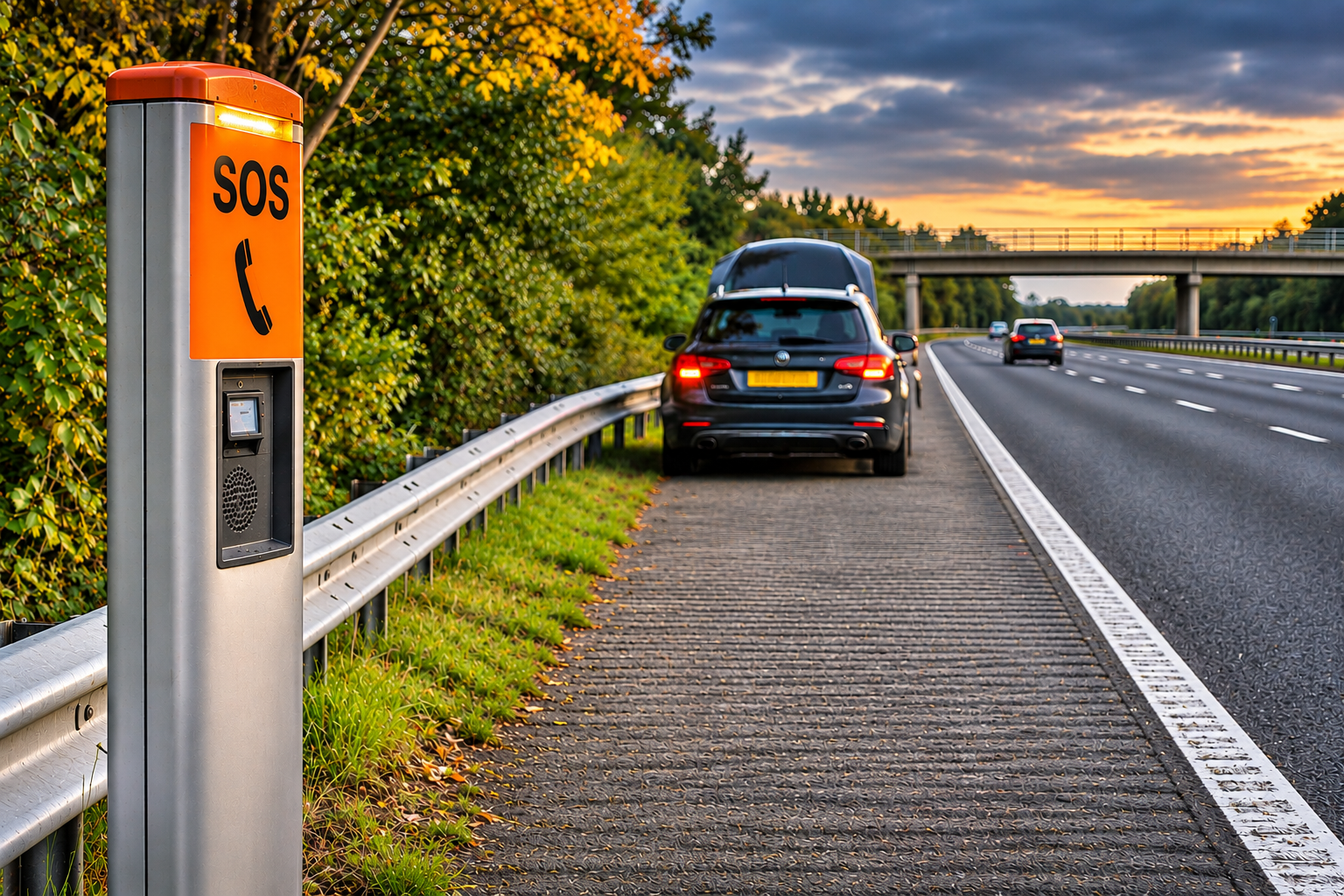
Motorists can request help through emergency telephones, dedicated contact channels and supported digital services.
A central traffic monitoring operation helps coordinate assistance and incident response.
The system illustrates how motorway operators can combine patrol vehicles, traffic monitoring and recovery arrangements to support motorists on major highways.
Electric vehicles and the changing breakdown landscape
Vehicle electrification is introducing new technical requirements, but traditional faults remain common.
Recent AA data from the UK indicates that tyres, 12-volt batteries and other conventional problems continue to account for a substantial proportion of electric-vehicle breakdowns.
In September 2026, the AA reported that 87.5% of its EV breakdowns were resolved at the roadside, compared with 84.6% for petrol and diesel vehicles.
These are operator-specific figures, not national repair success rates.
What can motorists learn from different countries?
The international comparison highlights three developments: greater use of digital assistance, increasing attention to roadside safety, and the importance of transparent recovery arrangements.
However, there is no single international recovery model. Regulations, motorway procedures, insurance cover and service availability differ considerably.
For anyone driving abroad, understanding local breakdown procedures before travelling can help avoid unnecessary confusion when assistance is needed.
The global direction is clear: roadside assistance is increasingly combining traditional vehicle recovery with digital communication, location technology and stronger safety procedures.
Sources and further reading
ADAC — Germany's 2025 roadside assistance figures, published 10 March 2026
Spain's DGT — Official connected V16 warning beacon requirements
Automobile Club d'Italia — Warning about fraudulent recovery services, 9 November 2026
AAA — Roadside safety and Move Over research, 16 October 2026
French Government — Public information on motorway assistance
Disclaimer
This article has been prepared using publicly available information obtained from official organisations, industry publications and other publicly accessible sources at the time of publication.
The ROBELIUM Newsroom provides independent editorial summaries intended to support general awareness of developments within the transport, mobility and roadside assistance sectors.
Content should not be interpreted as live traffic management, operational forecasting, route guidance, legal advice, safety advice or professional advice.
ROBELIUM is not affiliated with, endorsed by, or acting on behalf of any official transport authority, public body, road operator, emergency service or third-party organisation referenced in this article, unless explicitly stated.