Observed Signals
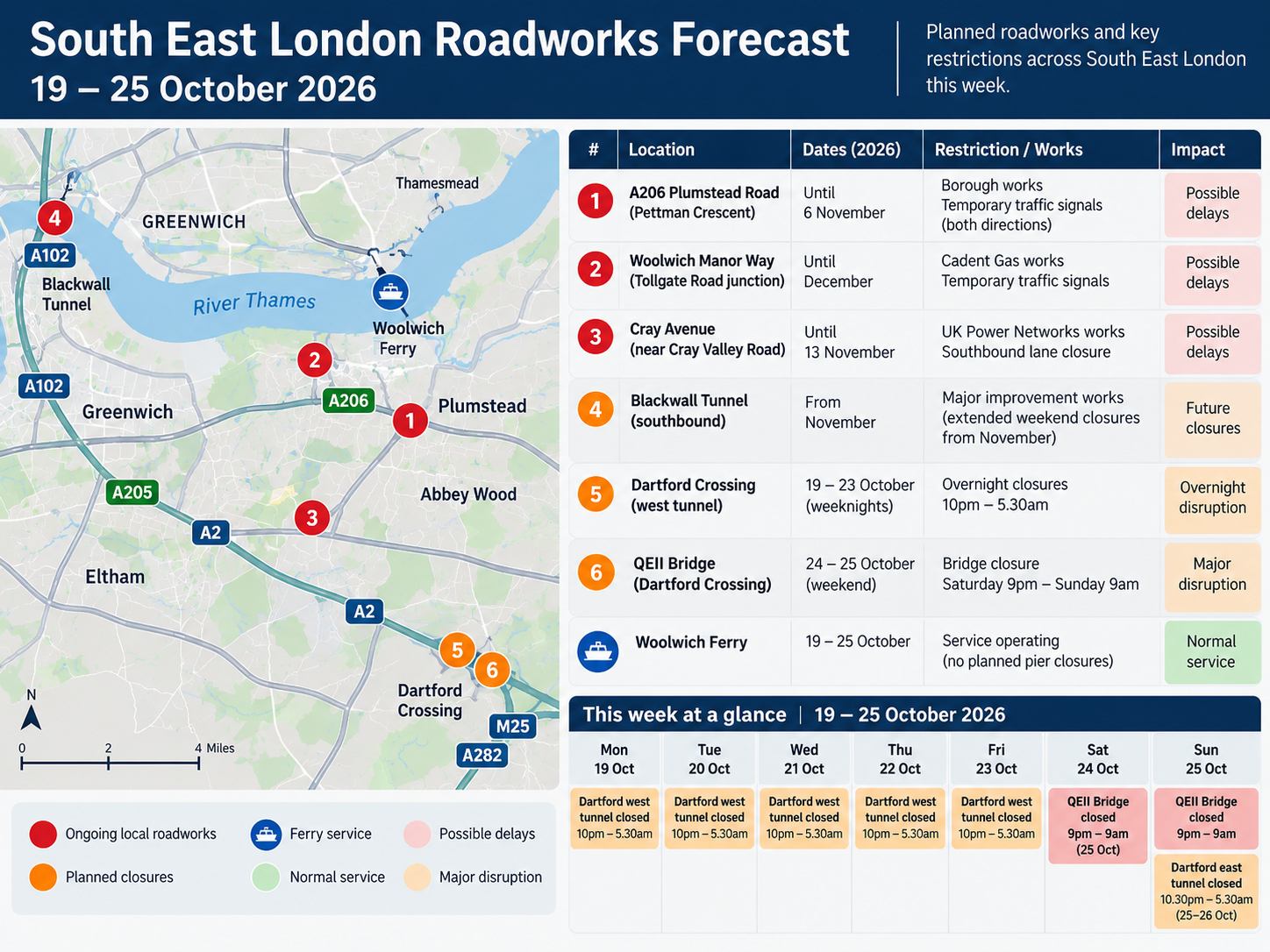
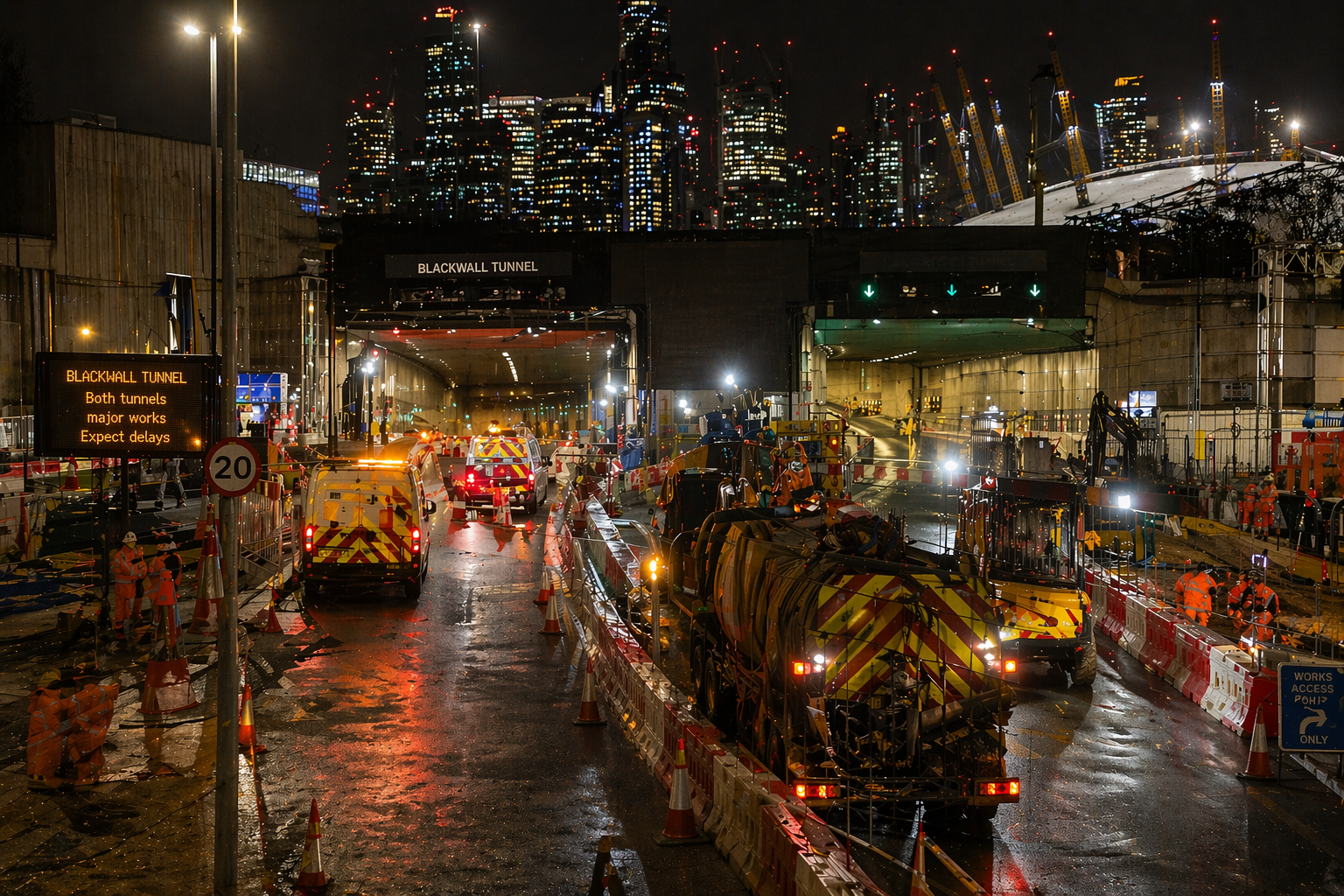
Disclosures from Transport for London indicate that the Blackwall Tunnel continues to operate under a structured programme of overnight closures between approximately 22:00 and 05:00 on selected weekdays, with direction-specific restrictions applied on a rotating weekly basis.
👉 https://tfl.gov.uk/corporate/transparency/freedom-of-information/foi-request-detail?referenceId=FOI-4908-2526
Parallel activity suggests that the Silvertown Tunnel remains subject to intermittent overnight works, with lane restrictions and closures applied on a non-fixed schedule.
Live network updates published by Transport for London show that, even in the absence of major incidents, traffic conditions tend to fluctuate around planned engineering windows.
👉 https://tfl.gov.uk/traffic/status
Additional roadworks activity continues to be observed across supporting corridors, including sections of the A102, A13 and approaches to central river crossings, reducing available diversion capacity during overnight periods.
Likely Direction
Observed patterns indicate that a combination of scheduled tunnel maintenance and variable overnight works is contributing to repeatable disruption cycles across east London’s river crossings. Traffic redistribution appears to follow consistent diversion routes when primary crossings are restricted, suggesting a stable but constrained network response.
Implication
The alignment of planned closures with reduced alternative route capacity is likely to sustain periodic congestion during overnight hours. For operators and commuters, this may require continued reliance on pre-planned diversion strategies and increased monitoring of real-time conditions during engineering windows.
This analysis is based on publicly observable signals and does not represent official statements from the companies mentioned.