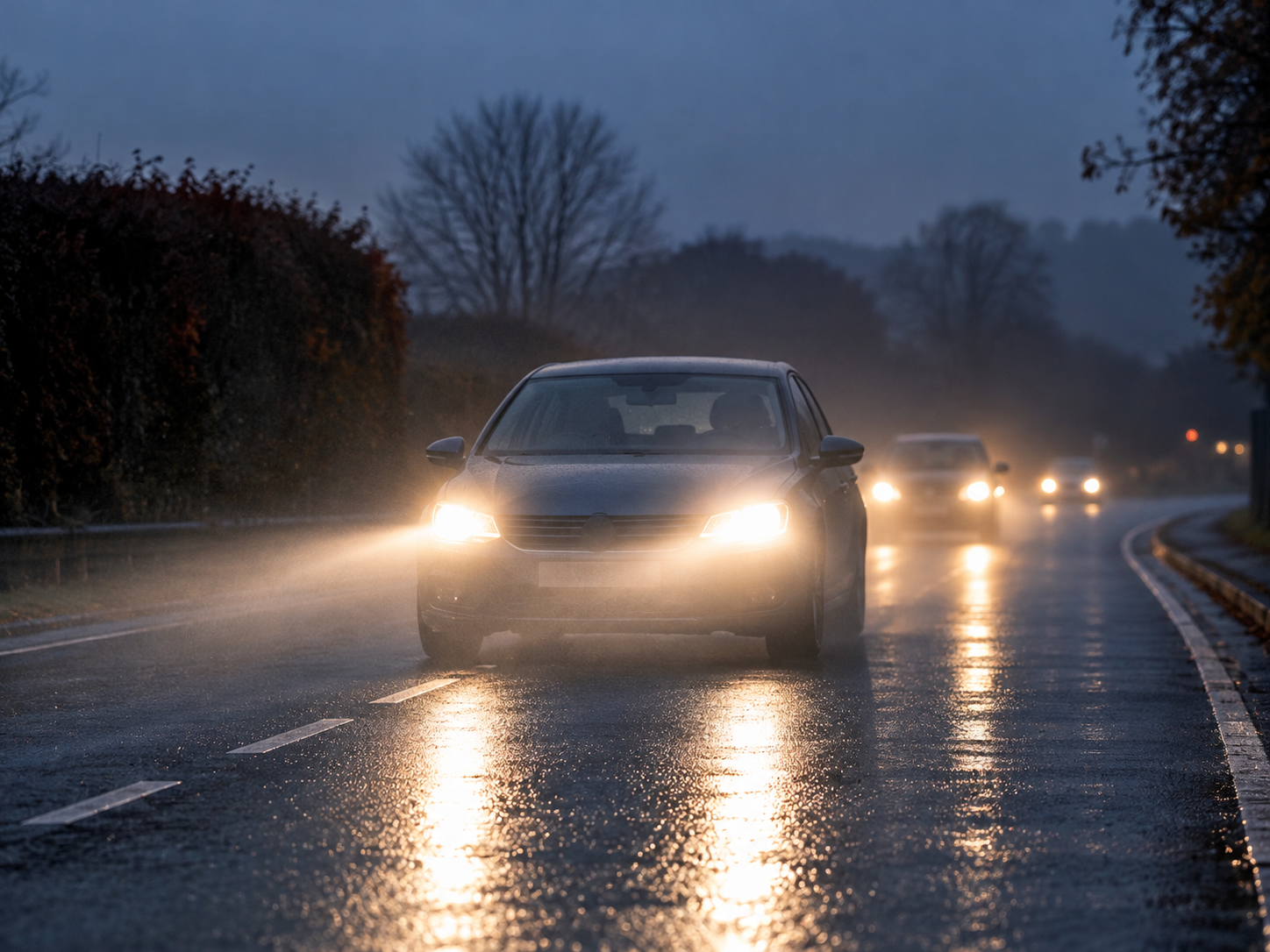
A vehicle can start normally, display no warning lights and feel completely ordinary to drive.
It can also have an outstanding safety recall.
Current UK recall information shows why those two facts are not necessarily contradictory. Safety campaigns involving major manufacturers continue to address defects ranging from ageing airbag inflators to high-voltage batteries capable of overheating.
The common feature is more important than the badge on the bonnet: some serious defects may not give a driver an obvious warning before the safety system is needed or the failure occurs.
What makes a recall a serious safety issue?
The Driver and Vehicle Standards Agency defines a serious safety defect as a problem in the design or manufacture of a vehicle, component or accessory that is likely to cause injury or death and can occur suddenly and without warning.
That separates a safety recall from many of the faults encountered during routine vehicle ownership.
A worn component identified during servicing is one thing.
A component capable of failing unexpectedly is another.
UK government guidance states that where a serious safety problem has been identified, affected vehicles need to be repaired or the relevant component replaced by the manufacturer. Recall work is normally carried out without charge to the owner.
Audi: an airbag defect with potentially severe consequences
One of the clearest examples remains the international Takata airbag recall.
Audi UK currently warns that certain vehicles produced approximately between 2005 and 2018 could contain affected Takata airbag components.
The concern is not simply that an airbag may fail to operate.
Audi states that, if an affected front airbag deploys, its gas-generator housing could rupture. Metal fragments could then be propelled into the passenger compartment, creating the potential for serious or fatal injuries.
The campaign remains active and vehicle-specific. Audi instructs owners to use the vehicle's VIN to establish whether action is currently required.
There has also been further UK recall activity in 2026.
The DVSA database records Audi recall R/2026/089, dated 25 February 2026, involving replacement of Takata driver's airbags on affected vehicles. The official recall information again identifies the possibility of the gas-generator housing rupturing and metal components causing life-threatening injury.
Not every Audi from the relevant period is affected, and individual vehicle status should therefore be established through the manufacturer's VIN checker.
BMW: the same component family, different vehicles
BMW is also continuing to address Takata-related airbag risk.
Its current UK information identifies potentially affected vehicles across numerous model families manufactured between 1999 and 2018, including examples from the 1, 2, 3, 4, 5 and 6 Series as well as X1, X3, X4, X5 and X6 ranges.
Again, inclusion of a model does not mean every vehicle within that model range is subject to recall.
BMW states that affected Takata inflators can degrade with age and potentially become faulty. Owners are instructed to perform a VIN check and arrange a free repair where required.
Significantly, BMW also notes that in some cases an owner may be advised not to drive the vehicle until the appropriate action has been taken.
Volvo EX30: a different generation of safety concern
Safety recalls are not restricted to ageing vehicles.
The Volvo EX30 provides a much newer example.
UK recall R/2025/559, dated 22 January 2026, concerns affected 2025-model-year Volvo EX30 vehicles.
The DVSA recall record states that following charging there is a risk of a high-voltage battery cell overheating, with a consequent risk of fire. The record identifies 10,577 affected vehicles.
Volvo's current UK guidance instructs owners of affected vehicles to limit the maximum battery state of charge to 70% while awaiting the required work.
Following discussions with the DVSA, additional precautions include not leaving an affected vehicle unattended while charging inside buildings or covered areas and seeking assistance if relevant warnings appear during or after charging.
Volvo says a repair has been identified involving replacement of components within the battery and that parts are arriving in the UK.
This is an important distinction in the modern recall environment: some safety actions involve not only arranging a workshop repair but also temporarily changing how a vehicle is used.
Ford Kuga: software and fire risk
Software can also sit directly within a physical safety recall.
UK records for certain Ford Kuga hybrid and plug-in hybrid vehicles include campaigns concerning a potential under-bonnet fire risk.
Recall R/2025/243 identified certain Kuga, S-Max and Galaxy vehicles where the remedy for an earlier safety recall may not have been installed correctly, despite the repair being recorded as successfully completed.
The prescribed action was another Powertrain Control Module software update.
A separate Kuga campaign, R/2025/163, similarly concerned remedy software intended to mitigate a potential fire risk that may not have been correctly installed.
The example illustrates how the distinction between a mechanical and software-related recall is becoming less straightforward.
A software correction can itself be part of the remedy for a physical vehicle-safety risk.
Audi e-tron GT: when charging instructions become part of the recall
High-voltage battery safety has also previously resulted in specific restrictions for affected Audi e-tron GT vehicles.
DVSA records show several safety recalls involving battery modules where technical irregularities could lead to overheating or fire.
For certain affected vehicles, owners were instructed to limit charging to 80% until inspection or repair. Some recall instructions also advised against charging under cover or parking adjacent to or beneath buildings until the necessary inspection had taken place.
These campaigns date from 2024, but remain relevant to the wider issue of outstanding recalls because vehicles can continue to circulate until the required action has been completed.
The second-hand vehicle problem
A recall does not disappear when a vehicle changes hands.
That makes recall status particularly relevant in the used-car market.
An owner may have missed manufacturer correspondence. Contact information may have changed. A vehicle may have passed between several owners since the original campaign began.
Ford specifically advises prospective buyers who do not yet own a vehicle to use the DVSA recall service to check for outstanding safety recalls.
The UK Government service allows a registration number to be checked for safety recalls that have not yet been checked or repaired.
For a used vehicle, recall status therefore sits alongside MOT history, service history and physical condition as another piece of information available before or after purchase.
The important distinction: model does not mean vehicle
Recall reporting requires precision.
A manufacturer announcing a campaign affecting a particular model does not establish that every example of that model is defective.
Production dates, component suppliers, manufacturing batches and individual vehicle specifications can determine whether a particular vehicle is included.
For that reason, registration and VIN checks remain more important than simply recognising a model name in a recall notice.
Mercedes-Benz, Audi, BMW and Ford all provide mechanisms for checking individual vehicles, while the government's DVSA service provides an independent route for checking outstanding UK safety recalls.
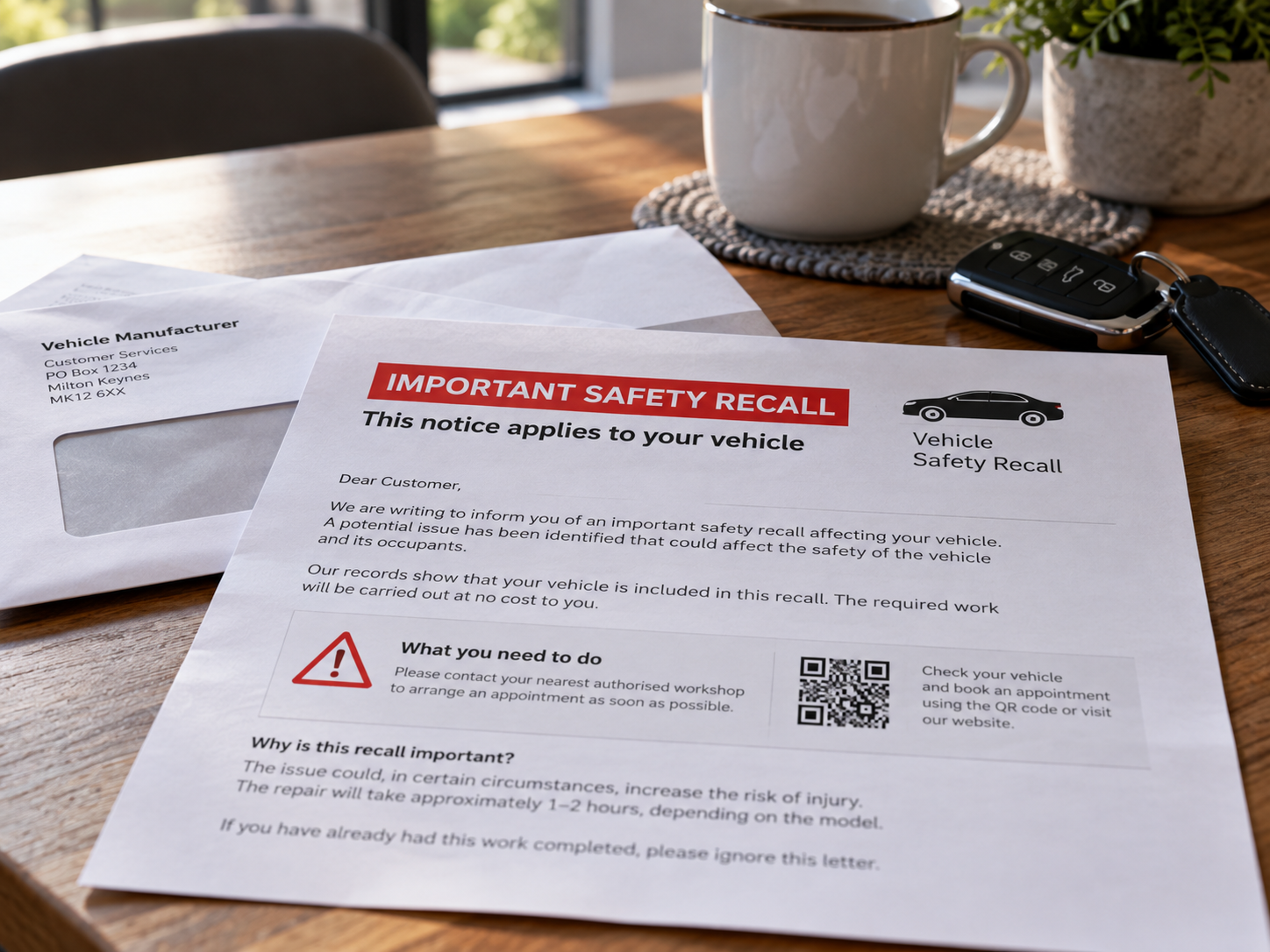
A recall letter is not routine correspondence
There is another practical point.
Vehicles are increasingly capable of detecting faults themselves. Dashboards can report tyre pressure, engine-management problems, battery condition and failures within numerous electronic systems.
An outstanding safety recall may produce none of those warnings.
That is precisely why recall systems exist.
The vehicle may appear entirely normal while information held against its registration or VIN says otherwise.
For drivers, the appropriate response is straightforward: check the vehicle, follow the manufacturer's instructions and complete outstanding safety work where required.
Sometimes the most important warning about a vehicle is the one that never appears on its dashboard.
Information note
Recall information can change as manufacturers identify additional vehicles, components or production periods. Inclusion of a manufacturer or model in this article does not mean that every vehicle of that type is affected.
Owners should establish the status of an individual vehicle using the official UK Government/DVSA recall service and, where appropriate, the manufacturer's VIN-based recall checker.
Disclaimer
ROBELIUM Newsroom provides editorial information based on publicly available sources. This article is intended for general awareness and does not constitute mechanical diagnosis, vehicle inspection, manufacturer instruction or safety advice.
Where a manufacturer or competent authority has issued instructions concerning an affected vehicle, those instructions should take precedence. Recall status and required action should always be confirmed through the relevant manufacturer or official authority.